Pastificio Garofalo was founded in 1789 in Gragnano, Italy, a coastal hillside town outside Naples celebrated as the cradle of dry pasta making. Garofalo was granted an official royal concession by the local municipality for consistent artisan excellence. The company utilizes cold spring water sourced from the nearby Lattari Mountains combined with high-protein durum semolina. Every batch is certified Pasta di Gragnano IGP, carrying protected geographical status under European Union regulations. It is still produced and packaged at the original historic location in Gragnano.
The short answer
Best overall

Pastificio Garofalo Spaghetti IGP
Garofalo was crowned the top pick by America's Test Kitchen and praised in comparative kitchen trials for its exceptional sauce-gripping surface.
Amazon
Origin: Gragnano, Italy · Die: Bronze cut · Weight: 16 oz (1 lb) · Certification: IGP
Best value
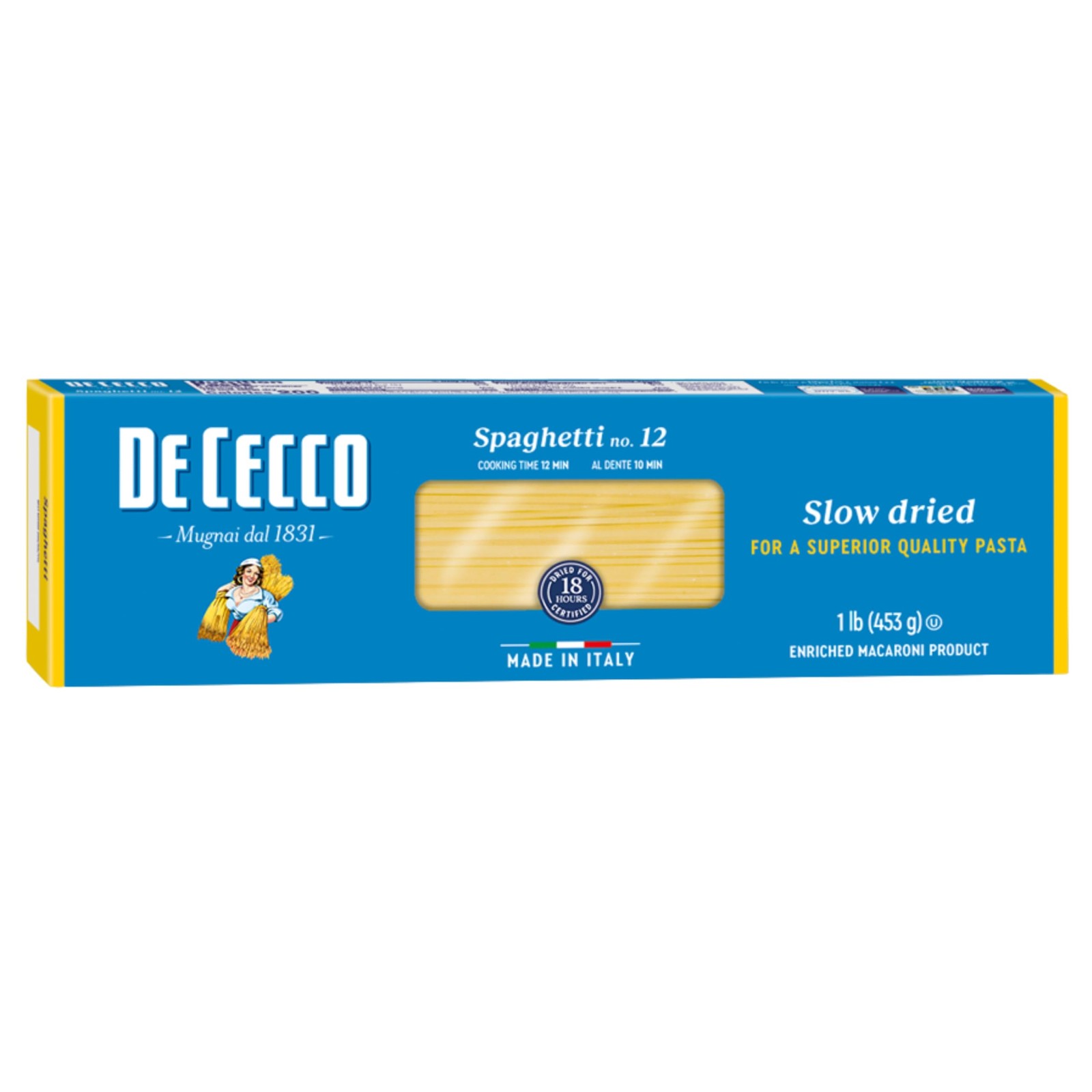
De Cecco Spaghetti No. 12
De Cecco remains the gold standard supermarket workhorse recommended by Serious Eats, Saveur, and professional chefs worldwide.
Amazon
Origin: Abruzzo, Italy · Die: Bronze cut · Weight: 16 oz (1 lb) · Protein: 14%
Cheapest that's still good

Barilla Spaghetti
Barilla is the undisputed value champion, winning blind supermarket taste tests by The Kitchn against options three times the price.
Amazon
Origin: Italy/USA · Die: Traditional · Weight: 16 oz (1 lb) · Cook time: 9 min
Upgrade pick
Rustichella d'Abruzzo Bucatini
Celebrated by New York Magazine's The Strategist as the ultimate sauce-gripping pasta, Rustichella d'Abruzzo is a luxury artisan standard.
Amazon
Origin: Abruzzo, Italy · Die: Bronze cut · Weight: 17.6 oz (500g) · Drying: 40-50 hours
Healthiest choice

Bionaturae Organic Whole Wheat Spaghetti
Bionaturae delivers a completely unrefined profile crafted from 100% whole durum wheat certified USDA Organic and Non-GMO Project Verified.
Amazon
Origin: Tuscany, Italy · Certification: USDA Organic, Non-GMO Project · Grain: 100% Whole Durum Wheat · Weight: 16 oz
Best for thick sauces

Rummo Rigatoni No. 50 Lenta Lavorazione
Rummo utilizes a patented slow-processing Lenta Lavorazione method that guarantees certified structural firmness and shape retention.
Amazon
Origin: Benevento, Italy · Die: Bronze cut · Weight: 16 oz (1 lb) · Method: Lenta Lavorazione
The same thing, sold by Danilli All
Our own stock, at our price, shipped to you. italian pasta and close matches.
D
Not sure which one?Tell Danilli what you need and it picks one of these for you. Free.
+
Free with a Danilli accountAn email when a product you saved drops in price, the Today's Deals email every morning, and 50 free credits to ask Danilli anything (guests get 3 questions). Nothing to pay.
Sign up free
What to consider
What it is
Dried Italian pasta is a shelf-stable noodle crafted from hard durum wheat semolina and mountain spring water, shaped through specialized dies and dehydrated over several hours. When boiled, it releases surface starches that emulsify with cooking fat and pasta water to bind sauces to every noodle.
The pros
Bronze-cut surfaces hold emulsions tenaciously, delivering a toothsome chew and clean wheat flavor that never turns gummy.
The cons
Authentic low-temperature dried pasta requires longer boiling times (typically 10 to 14 minutes) and commands a higher price per pound than domestic supermarket boxes.
Other options
If you need a zero-wheat or ultra-fast option, consider high-protein legume noodles like chickpea rotini or rapid-boil fresh refrigerated egg pasta.
What matters
The single most important factor in dried Italian pasta is whether it is extruded through bronze dies rather than Teflon. Bronze dies create a rough, chalky micro-texture that clings tightly to sauces rather than letting oil and emulsion slide away into the bottom of the bowl. Drying temperature also matters immensely, as slow low-temperature drying preserves natural nutty wheat sugars instead of flash-baking them into glassy brittleness. High protein content from 100% durum wheat semolina guarantees structural integrity and prevents mushiness when tossed in hot pans. Finally, geographical indications like Pasta di Gragnano IGP ensure the noodles are produced using certified regional spring water and traditional methods.
How Danilli picked
Danilli looked for these things, the same ones the testers score:
Die extrusion material
Traditional bronze dies leave a microscopic, sandpapery texture across the pasta surface. This rough exterior mechanically grips emulsified sauces, whereas slick Teflon dies cause liquid to pool uselessly on the plate.
Drying time and temperature
Slow drying at low temperatures preserves the integrity of the wheat starches and delicate nutty flavors. Industrial fast-drying at high heat bakes the gluten network, resulting in a dark orange hue and fragile noodles that turn fragile or mushy quickly.
Protein content
Superior Italian pasta utilizes coarse durum semolina boasting 13% to 14.5% protein. Higher gluten density maintains a firm core that resists overcooking even when finished in a hot pan sauce.
Origin and certification
Designations like Pasta di Gragnano IGP enforce strict European legal standards on wheat quality, bronze dies, and pure local spring water. Traceability confirms the pasta was genuinely made and packaged in Italy rather than domestic white-label plants.
Starch release
A quality noodle sheds just enough fine surface starch into the pot liquid without falling apart. This starchy cooking water is the foundational binder required for classic Italian pan-emulsions like carbonara and cacio e pepe.
Who this is for
This guide is for home cooks who want restaurant-grade pasta dishes where sauce and starches emulsify smoothly into every strand and tube. It is ideal for anyone seeking authentic Italian pantry staples imported directly from historic milling regions. Shoppers looking for ultra-quick two-minute microwave noodles or specialized low-carb alternatives should look elsewhere.
The picks, one by one
01
Best overall
Pastificio Garofalo Spaghetti IGP · about $4
Garofalo was crowned the top pick by America's Test Kitchen and praised in comparative kitchen trials for its exceptional sauce-gripping surface. Extruded through bronze dies in Gragnano and dried slowly, it delivers a deeply satisfying, springy al dente chew that holds up reliably against rich ragùs and light emulsions alike.
The story behind it
In day-to-day cooking, Garofalo Spaghetti handles with exceptional forgiveness. If you leave it boiling an extra minute past its suggested 11-minute mark, it retains its core structural spring rather than collapsing into softness. The exterior is noticeably dusty and pale ivory straight from the package, producing a generous cloud of cloudy, starchy water essential for finishing sauces in a skillet. It pairs equally well with simple garlic and olive oil or heavy meat sauces, coating evenly without pooling. The elongated strand twirls cleanly around a fork without splitting or snapping mid-bite. Home cooks who prefer thin, flash-cooking angel hair should skip this, as it is a hearty, substantial strand.
Origin: Gragnano, Italy · Die: Bronze cut · Weight: 16 oz (1 lb) · Certification: IGP
Flaws but not dealbreakers
- Takes a full 11 to 12 minutes to boil to true al dente.
- Individual single-pack boxes often carry an import markup online compared to club-store multipacks.
What the experts found
America's Test Kitchen: Garofalo ranked as the standout winner in comprehensive pasta taste tests for its superior chewy texture and springy bite compared to domestic and standard supermarket competitors.
Serious Eats: Garofalo from Gragnano is highlighted as an exceptional bronze-cut Italian benchmark that grabs pan sauces reliably.
02
Best value
De Cecco Spaghetti No. 12 · about $3
De Cecco remains the gold standard supermarket workhorse recommended by Serious Eats, Saveur, and professional chefs worldwide. It utilizes coarse durum semolina with a verified 14% protein content and bronze dies, providing benchmark texture at roughly half the cost of boutique specialty imports.
The story behind it
The De Cecco family started milling wheat in 1831 at Fara San Martino in Abruzzo, Italy, nestled right at the base of the Maiella mountains. In 1886, Filippo De Cecco invented a groundbreaking low-temperature drying cabin that allowed pasta to dry independent of outdoor weather conditions without scorching the grain. Today, De Cecco still draws pristine spring water from the Verde River flowing through the national park. The company remains headquartered and manufactured in Fara San Martino, Abruzzo.
De Cecco is ubiquitous for a reason: it punches significantly above its accessible price point. The surface of No. 12 spaghetti feels rough like fine-grit sandpaper, which allows smooth pan sauces to coat every inch rather than sliding off. During boiling, it holds a rigid spine that makes timing your dinner effortless. Even when transferred directly into a hot skillet with sauce and tossed vigorously, the strands do not shred or tear. It is widely available in grocery stores across America, making it easy to replenish without waiting for online delivery. The only cooks who might want to look elsewhere are purists looking for estate-grown heirloom grains.
Origin: Abruzzo, Italy · Die: Bronze cut · Weight: 16 oz (1 lb) · Protein: 14%
Flaws but not dealbreakers
- Cardboard packaging with an open plastic cellophane window can occasionally tear during shipping.
- Slightly less coarse exterior roughness than small-batch heirloom artisan brands.
What the experts found
Serious Eats: De Cecco is praised as the ultimate reliable supermarket workhorse found on professional culinary stations for its high protein framework and bronze die bite.
The Kitchn: De Cecco consistently ranks near the top of grocery pasta tests thanks to its firm chew and superior sauce-gripping finish.
03
Cheapest that's still good
Barilla Spaghetti · about $2
Barilla is the undisputed value champion, winning blind supermarket taste tests by The Kitchn against options three times the price. While it lacks the extreme roughness of artisanal bronze cuts, its dense formulation cooks reliably al dente and never turns to mush, costing under two dollars per box.
The story behind it
Barilla was founded in 1877 as a small bread and pasta shop in Parma, Italy, by Pietro Barilla. Over four generations, the family expanded the brand into the world's most widely recognized pasta manufacturer. While Barilla operates advanced mills globally, including in the United States, its pasta is formulated to strict traditional Italian standards with 100% durum wheat. The family-owned headquarters remains based in Parma.
Barilla is the pantry safety net for millions of households because of its rock-solid consistency. The standard blue box noodles are extruded through conventional dies, giving them a smoother, glossy finish that cooks rapidly and evenly. While thinner olive-oil-based sauces might not cling with the same tenacity as bronze-cut options, it performs remarkably well in thick American meat sauces, casseroles, and standard marinara. It has a slightly more flexible mouthfeel and shorter boil window, reaching optimal chew in about 9 minutes. Busy weeknight cooks feeding large families on a tight grocery budget will appreciate its balance of reliability and extreme affordability. Anyone seeking an authentic chalky, porous Italian surface should consider stepping up to bronze-cut alternatives.
Origin: Italy/USA · Die: Traditional · Weight: 16 oz (1 lb) · Cook time: 9 min
Flaws but not dealbreakers
- Smoother extruded exterior holds thinner oil and butter sauces less effectively than bronze dies.
- Releases less emulsifying surface starch into the pasta cooking water.
What the experts found
The Kitchn: Barilla Spaghetti was awarded best spaghetti honors in an extensive 8-brand taste test for its satisfying chew, consistent thickness, and unbeatable price.
Epicurious: Barilla remains the everyday standard for predictable, reliable al dente texture at budget supermarket pricing.
04
Upgrade pick
Rustichella d'Abruzzo Bucatini · about $8
Celebrated by New York Magazine's The Strategist as the ultimate sauce-gripping pasta, Rustichella d'Abruzzo is a luxury artisan standard. Crafted from select durum semolina, Apennine mountain spring water, and dried at low heat for up to 50 hours, it offers unmatched wheaty sweetness and rustic chew.
The story behind it
Rustichella d'Abruzzo traces its roots back to 1924 in Penne, Italy, when Gaetano Sergiacomo established the Gaetano Sergiacomo Pastificio. In 1981, his grandson Gianluigi Peduzzi revived the family brand under the name Rustichella d'Abruzzo to preserve old-world pasta heritage. The pastificio continues to extrude through circular bronze dies and dries its shapes in low-temperature static drying rooms for up to 56 hours using water from the surrounding Gran Sasso mountains. The company remains proudly family-owned in Pianella, Abruzzo.
Cooking with Rustichella d'Abruzzo feels distinctly like preparing fresh, handcrafted pasta from an Italian trattoria. The strands are thick, pale straw-colored, and heavily coated in coarse wheat dust that visibly dissolves into the water to create an opaque, velvety broth. When boiled, the bucatini expands slightly while maintaining a robust, springy resistance at its center. Its hollow core draws sauce inside, ensuring every mouthful of amatriciana or cacio e pepe explodes with balanced richness. Because it is dried slowly for several days, it requires closer attention and around 11 to 13 minutes to cook through. It is distinctly high-end, making it best reserved for showcase meals and dinner parties where the noodle is the star.
Origin: Abruzzo, Italy · Die: Bronze cut · Weight: 17.6 oz (500g) · Drying: 40-50 hours
Flaws but not dealbreakers
- Priced significantly higher per package than everyday supermarket brands.
- Thick hollow bucatini requires a very large pot of boiling water to ensure strands cook evenly without tangling.
What the experts found
The Strategist (NY Mag): The Strategist named Rustichella d'Abruzzo bucatini the absolute best sauce-gripping option due to its mountain-spring water, bronze dies, and leisurely drying process.
Food & Wine: Consistently praised by Italian culinary editors as a top-shelf luxury import that brings authentic restaurant quality to home kitchens.
05
Healthiest choice
Bionaturae Organic Whole Wheat Spaghetti · about $5
Bionaturae delivers a completely unrefined profile crafted from 100% whole durum wheat certified USDA Organic and Non-GMO Project Verified. Sourced from third-generation family farms in Tuscany and bronze extruded, it provides 6 grams of dietary fiber and 7 grams of protein per serving without any enriched flours, preservatives, or artificial additives.
The story behind it
Bionaturae was founded in 1995 in Tuscany, Italy, by an American and Italian team dedicated to introducing genuine organic Mediterranean culinary staples to American households. The brand partners exclusively with small family farms across Italy that practice traditional organic crop rotation and regenerative agriculture without synthetic pesticides or chemical fertilizers. The pasta is processed in a dedicated facility in Tuscany using mountain spring water and historic bronze dies. Every batch is certified USDA Organic and packaged in recyclable materials.
Unlike ordinary whole wheat pastas that can taste gritty, cardboard-like, or harsh, Bionaturae utilizes an exclusive slow-milling technique that preserves the sweet, nutty germ of the wheat grain without coarseness. The noodles are bronze extruded and slow dried at low temperatures, creating a beautifully rough exterior that grabs tomato and vegetable sauces effectively. In the pot, the strands remain surprisingly intact without breaking or shedding heavy mud into the cooking water. It has a deeply aromatic, earthy aroma while boiling that complements hearty greens, mushrooms, and olive oil sauces. Each serving contains zero added sugars, zero sodium, and only single-ingredient organic whole durum wheat semolina. It is the premier choice for health-conscious diners who refuse to compromise on authentic Italian texture.
Origin: Tuscany, Italy · Certification: USDA Organic, Non-GMO Project · Grain: 100% Whole Durum Wheat · Weight: 16 oz
Flaws but not dealbreakers
- Carries an earthier, darker wheat flavor profile that may surprise those used to standard white semolina.
- Can become brittle if stirred too vigorously during the first two minutes of boiling.
What the experts found
Consumer Reports: Bionaturae is consistently recognized in organic testing for its clean, single-ingredient sourcing and absence of synthetic additives.
Clean Label Project: Honored in organic pantry evaluations for prioritizing certified heirloom grains free from industrial processing aids.
06
Best for thick sauces
Rummo Rigatoni No. 50 Lenta Lavorazione · about $4
Rummo utilizes a patented slow-processing Lenta Lavorazione method that guarantees certified structural firmness and shape retention. Rigatoni No. 50 features bold ridges and an ample hollow tube that catches meat chunks, chunky bolognese, and heavy creams better than any competitor.
The story behind it
Rummo was established in 1846 by Antonio Rummo in Benevento, Italy, along the banks of the Calore and Sabato rivers where historic grain mills operated. Surviving catastrophic flooding in 2015 with massive community support, Rummo patented its signature 'Lenta Lavorazione' (Slow Processing) method, which scientifically tests and certifies every pasta batch for firm bite and tensile resistance. Rummo continues to manufacture its renowned pastas in Benevento in the Campania region of southern Italy.
Rummo Rigatoni No. 50 is the ultimate pasta for heavy, sauce-laden comfort meals. The exterior ridges are sharply defined and aggressively rough, ensuring viscous cream sauces or thick ragù coat every angle. Meanwhile, the wide cylinder traps small morsels of sausage, pancetta, and braised vegetables directly inside the noodle. Thanks to Rummo's rigorous laboratory testing for tensile elasticity, this pasta resists overcooking even if you hold it warm in a finished sauce pan on the stovetop. It delivers a deeply satisfying, toothsome bite that never turns gummy or limp. It cooks to al dente in approximately 13 minutes in plenty of well-salted boiling water. Those cooking light seafood sauces should opt for a delicate long strand instead.
Origin: Benevento, Italy · Die: Bronze cut · Weight: 16 oz (1 lb) · Method: Lenta Lavorazione
Flaws but not dealbreakers
- Requires a substantial boiling time of roughly 13 to 14 minutes.
- The large, dense tube can crack if boiled in too small a volume of water.
What the experts found
Serious Eats: Rummo is highlighted for its patented slow-processing technique that creates unmatched structural durability and resistance to overcooking.
Olive Magazine: Rummo scored a top 8/10 in comparative pasta trials, praised for its deep golden color, pleasing artisan mouthfeel, and excellent sauce grip.
How Danilli chose
Expert testers at America's Test Kitchen, Serious Eats, Olive Magazine, and professional culinary panels boiled dozens of imported Italian pasta brands in carefully measured salted water. Testers evaluated strands and extruded shapes both unadorned with neutral oil and dressed in classic tomato, cacio e pepe, and butter emulsions. Panels rated each batch on tensile bite, al dente chew, sauce adhesion, starch release in cooking water, and wheat aroma over multiple controlled cooking sessions. Danilli read the reviews and tests below and compared current prices; it does not take money from brands to pick a product.
Sources: America's Test Kitchen · The Strategist (New York Magazine) · Serious Eats · The Kitchn · Olive Magazine · Consumer Reports
The ones Danilli skipped
Reviewers tested these too; here is why they did not make the list.
- Mueller's Spaghetti: Lacks bronze die extrusion and becomes slippery and limp with poor sauce adhesion.
- Creamette Pasta: An industrial domestic white-flour noodle that lacks genuine durum semolina chew and wheat aroma.
- Ronzoni Spaghetti: Budget supermarket pasta that cooks soft quickly and fails to release sufficient starch for emulsified pan sauces.
- Trader Joe's Standard Spaghetti: Teflon-extruded noodles lack surface porosity and cause tomato sauces to slide off the pasta.
- Colavita Spaghetti: Decent baseline import, but fell short of De Cecco and Garofalo in blind chew and tensile resistance tests.
- Divella Penne: Cooks unevenly with fragile edges that easily split during skillet tossing.
- Great Value Enriched Spaghetti: Lowest-tier industrial wheat with high starch breakdown that turns mushy rapidly.
- San Giorgio Spaghetti: While commended forCompelling baseline flavor, it lacks the bronze-cut texture needed for authentic Italian sauces.
Questions people ask
Why is bronze-cut pasta better than Teflon-cut pasta?
Bronze dies leave a rough, microscopically abrasive texture across the pasta that physically grips sauce and fat droplets. Slick Teflon dies are cheaper and faster to run in factories, but create smooth noodles where sauces slide right off into the bowl.
What does Pasta di Gragnano IGP mean on a package?
It indicates a legally protected geographical status from Gragnano, Italy, recognized as the capital of dried pasta. To earn the IGP seal, makers must use 100% durum semolina, local mountain spring water, bronze dies, and certified slow drying.
How much salt should I put in pasta water?
Use roughly 1 to 1.5 tablespoons of kosher salt (or 1 tablespoon of fine sea salt) per 4 quarts of boiling water. The water should taste pleasantly seasoned like mild sea soup, which penetrates and seasons the wheat internally as it cooks.
Should I rinse pasta after boiling?
Never rinse cooked pasta destined for hot dishes, as rinsing washes away precious surface starches that bind your sauce. The only exception is when preparing cold pasta salads, where rinsing stops cooking and washes away starch to prevent clumping.
Updates
- 2026-11-20 Researched the current reviews and prices.
Comments
Loading…
More guides in Food & gourmet All
Danilli may earn a small commission from Amazon or the store when you buy through these buttons. The price is the same for you. Pictures marked "picture by AI" are made by Danilli's AI to show the product; check the real photos on the store page.